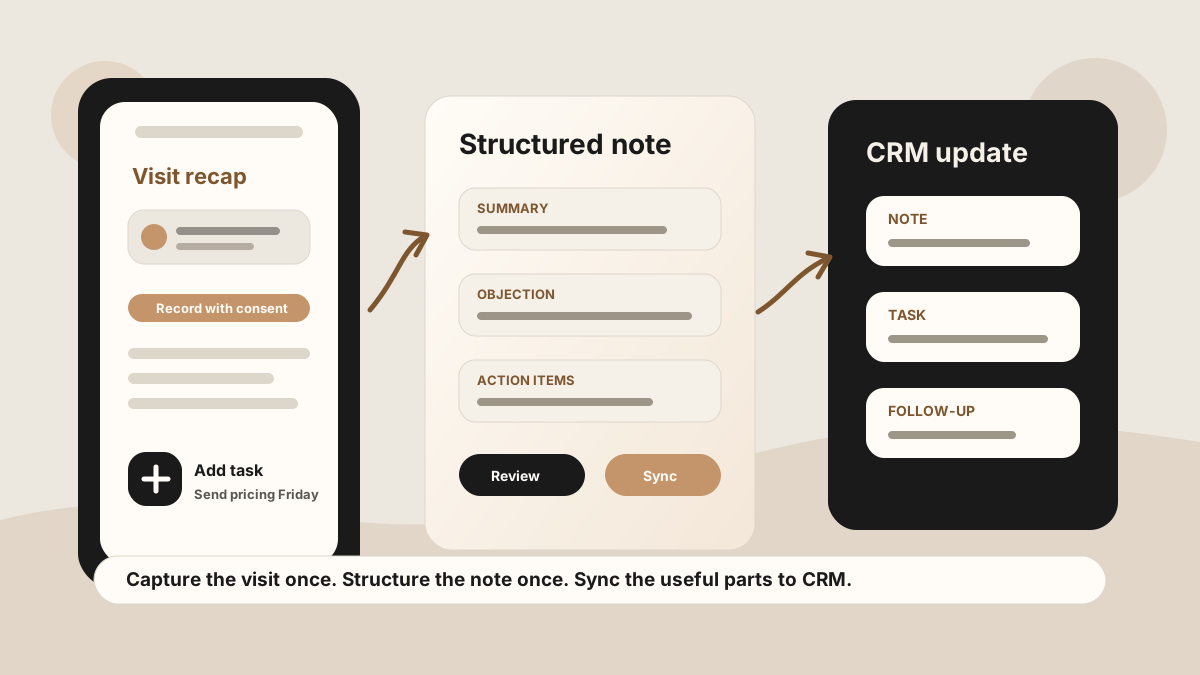
A field rep can have a great customer visit and still lose the value of the conversation. The buyer mentions a blocker, names a decision maker, asks for a follow-up, and gives a clue about timing. Then the rep walks to the car, checks the next appointment, and the detail starts to fade.
That is the job of a sales visit notes app: capture the visit while the context is still sharp, turn it into a clean note and task list, then move the useful parts into the CRM. It is one layer inside the broader field sales app stack. If the day is built around outside sales routes, use the outside sales visit notes workflow for route-day capture and follow-up.
The goal is not to take more notes. The goal is to make every customer visit easier to follow up, hand off, and trust in the CRM.
Why Sales Visit Notes Break in the Field
Field sales is not a tidy desk workflow. Reps move between customer sites, conference booths, lobbies, showrooms, and parking lots. A notes workflow that works on a laptop can break the moment the rep has only three minutes before the next stop.
Current field sales tools often bundle route planning, mobile CRM, note tracking, follow-up task management, and activity logging. That is useful, but the meeting note still has to be fast enough for the field. If capturing the visit feels like filling out a form, reps will wait until later.
- Memory gets compressed. Specific buyer language becomes a generic note like "interested, follow up."
- Follow-up gets separated from the conversation. The task exists, but it does not explain what was promised.
- CRM updates happen too late. End-of-day notes are often less accurate than immediate visit recaps.
- Managers lose field visibility. They can see that visits happened, but not what changed in the account.
What a Sales Visit Notes App Should Capture
The best visit note is short enough to scan and specific enough to act on. It should preserve the buyer's real concern, the next step, and the CRM record where that context belongs.
| Visit detail | Why it matters | Where it goes next |
|---|---|---|
| Customer context | Explains who you met, where the visit happened, and what account or opportunity was discussed. | CRM contact, account, company, deal, or opportunity record. |
| Meeting summary | Preserves the business reason for the conversation without storing a giant note. | CRM note or activity timeline. |
| Buyer pain and objections | Shows what needs to be solved before the next sales step can move forward. | Visit note, opportunity context, or sales call report. |
| Action items | Turns promises into work with an owner and due date. | CRM task, follow-up email, or reminder. |
| Source meeting | Lets the team trace a note or task back to the visit that created it. | CRM note, task description, or customer meeting note. |
Sales Visit Notes App vs Mobile CRM
A mobile CRM is the system of record on the phone. It shows contacts, accounts, deals, activity, and tasks. A sales visit notes app is the capture layer that turns the live customer conversation into a useful CRM update.
Some field sales platforms combine both. Others work better as a stack: route planner, CRM, visit notes, follow-up, and reporting. The important question is not whether everything lives in one app. It is whether the note reaches the system of record without a copy-paste ritual.
A Field Rep Workflow for Sales Visit Notes
The workflow has to be simple enough to use between stops. This is the version that holds up during a real field day.
Use this after every customer visit
If your team needs a note format, start with the customer meeting notes template. If the problem is commitments getting lost, use the sales meeting action-item workflow.
How Visit Notes Should Sync to CRM
A visit note should not become another hidden notebook. The useful parts need to land where the next sales action happens.
- Sync the summary as a note. Keep it concise enough for another rep or manager to understand quickly.
- Create tasks from promises. Pricing, demos, samples, intros, technical answers, and next meetings should become visible work.
- Match the right record. Attach the note to the contact, account, company, opportunity, or deal where the follow-up belongs.
- Keep judgment fields reviewable. Stage, forecast, amount, and close date should usually require human confirmation.
For CRM-specific handoff, compare the Salesforce meeting-notes sync workflow and the HubSpot meeting-notes sync workflow. For task structure, see how to turn sales meeting notes into CRM tasks.
Common Sales Visit Notes Mistakes
Most teams do not fail because they lack a notes tool. They fail because the note is too slow, too vague, or disconnected from the follow-up workflow.
- Waiting until the end of the day. By then, the note is usually a summary of a memory, not the visit.
- Saving only a transcript. The transcript is backup. The CRM needs a concise summary and tasks.
- Creating generic reminders. "Follow up" is not enough. The task needs context and a due date.
- Letting notes live outside CRM. Notes that never reach the account record are hard to reuse.
- Choosing software around managers only. If the rep cannot use it quickly from the phone, adoption will fade.
Where LogicNotes Fits
LogicNotes is built for the sales visit that happens away from a video call. You record the in-person meeting on iPhone with consent or capture an immediate recap, get a structured AI summary and action items, then sync the useful context to your CRM or Google Sheets.
It pairs naturally with sales route planning and the broader field sales app guide: the route gets the rep to the visit, LogicNotes captures what happened, and the CRM gets the follow-up. For multi-stop days, use the sales route notes app workflow to keep each stop attached to notes and tasks. If the handoff after the visit is your bottleneck, use the field sales follow-up app workflow or the outside sales follow-up workflow. If the CRM activity log is too thin, use the field sales activity logging workflow. If you are starting from check-ins, use the sales rep visit tracking workflow.
Sales Visit Notes App FAQ
What is a sales visit notes app?
A sales visit notes app helps field reps capture what happened during an in-person customer visit, structure the note, create follow-up tasks, and sync useful context to the CRM.
What should sales visit notes include?
Sales visit notes should include customer context, meeting summary, buyer pain, objections, buying signals, stakeholders, promised follow-ups, owners, due dates, and the CRM record that should be updated.
Should field reps use a notes app or a CRM app?
Field reps usually need both. The notes app should capture and structure the visit quickly from the phone, while the CRM remains the system of record for accounts, contacts, deals, notes, and tasks.
When should field reps capture visit notes?
Field reps should capture visit notes during the meeting when appropriate or immediately after the visit, before moving to the next stop. Waiting until the end of the day makes notes more generic.
Where does LogicNotes fit?
LogicNotes fits between the customer visit and the CRM. It records in-person meetings on iPhone with consent, generates summaries and action items, and syncs CRM-ready notes and tasks to tools such as Salesforce, HubSpot, Zoho, Dynamics, or Google Sheets.
Capture the visit before it fades.
LogicNotes turns in-person sales visits into summaries, action items, and CRM-ready follow-up while the details are still fresh.
Download LogicNotes for iOS